
When Someone Pollutes Your Trust Battery (Part 2)
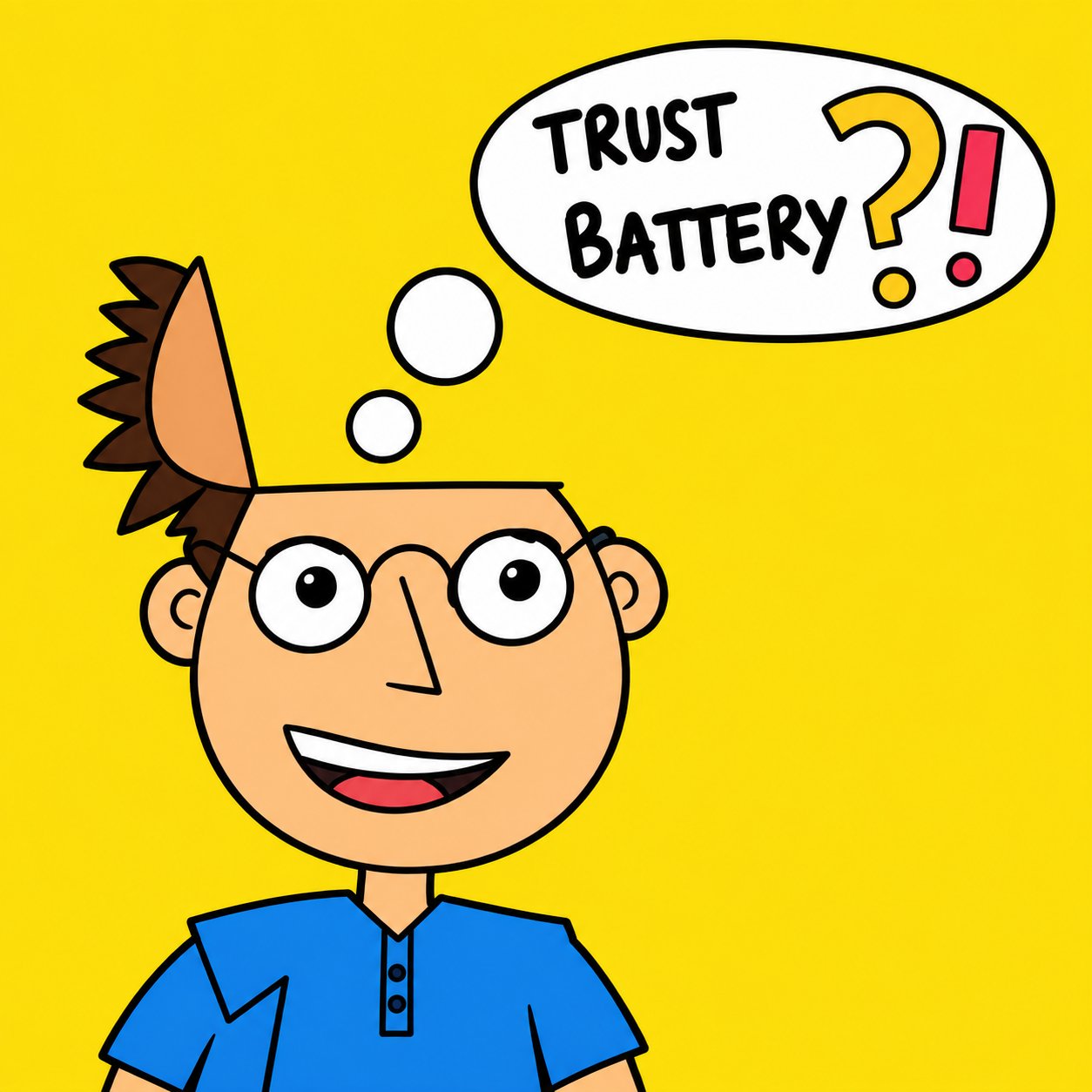
So now that we've met the trust battery, there is one small problem we need to talk about.
What happens when someone else starts messing with it?
You might have a perfectly healthy relationship with someone.
You've worked together.
You've delivered.
You've helped each other out.
Their trust battery with you is sitting comfortably at 90%.
Then somebody starts talking.
Not necessarily lying.
That would almost be easier.
Instead, they drop little comments.
The Little Drip
“Doug can be difficult.”
“Doug likes to control things.”
“I've noticed Doug can be a little…”
You get the idea.
Nothing dramatic.
Nothing that requires an HR meeting.
Just a little drip here.
Another drip there.
And eventually the battery isn't quite as full as it used to be.
The really clever part is that the person doing the polluting doesn't have to invent anything.
They just need to control the interpretation.
Doug asks a question.
“He's trying to challenge me.”
Doug makes a decision.
“He's trying to control everything.”
Doug doesn't respond immediately.
“He's ignoring me.”
Same Doug.
Different story.
Why Would Anyone Do This?
Sometimes there is no grand conspiracy.
People misunderstand each other.
People have bad experiences.
People carry baggage from previous jobs.
But sometimes there is a simpler explanation.
They feel threatened.
Maybe you have skills they don't.
Maybe leadership trusts you.
Maybe you're getting opportunities they wanted.
Maybe you're competing for the same position.
Or maybe you've simply wandered into somebody else's little kingdom without realizing there was a kingdom.
Suddenly, reducing your trust battery becomes useful.
Not necessarily because they want to destroy you.
Maybe they just want to make sure you're not quite as trusted as you were yesterday.
Don't Fight the Narrative
This is where things can get messy.
You discover what's happening.
Your natural reaction is to defend yourself.
You explain.
You clarify.
You tell everyone what really happened.
You start collecting evidence.
Before long, you're spending more time managing the story about you than doing the thing that created the reputation in the first place.
That's probably not a great strategy.
You can't control the narrative.
You can control the receipts.
Do what you said you would do.
Communicate clearly.
Own your mistakes.
Give people credit.
Document important decisions.
Don't gossip.
Don't retaliate.
And don't give somebody a beautiful new piece of evidence by losing your mind because they're telling people you're difficult.
Eventually, people have to reconcile the person they've been told about with the person they've actually experienced.
That's where reputation matters.
Narrative can travel quickly.
Reputation takes longer.
But reputation has something narrative doesn't.
Receipts.
So if your trust battery suddenly seems lower than it should be, take a breath.
Maybe you actually drained it.
Maybe there's a misunderstanding.
Or maybe somebody has been pouring a little something into it that doesn't belong there.
Either way, don't spend your life trying to clean everybody else's battery.
Keep yours clean.
Do good work.
Keep the receipts.
And let reality do some of the talking.
Doug is OK.